Chinese Robotics Firms Revolutionize UK Retail Sector
Chinese robotics companies are transforming UK retail through automation, addressing productivity gaps and labour shortages while reshaping the industry's workforce landscape.
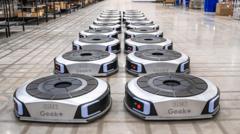
Chinese Robotics Firms Transforming UK Retail Landscape
The United Kingdom's retail sector is experiencing a significant transformation driven by advanced Chinese robotics technology. Chinese robotics firms are seizing a unique opportunity presented by Britain's persistent productivity challenges and critical labour shortages, introducing sophisticated automation solutions that are fundamentally reshaping how retailers operate across the country.
This convergence of economic factors and technological innovation represents a pivotal moment for the retail industry. As traditional hiring becomes increasingly difficult and productivity gains remain elusive, businesses are turning to automated systems to maintain competitive advantage and operational efficiency. Chinese manufacturers, with their established expertise in robotics development and competitive pricing, are positioning themselves as primary suppliers for this transformative wave.
Understanding the Productivity and Labour Challenge
Britain's economic landscape has been characterised by sluggish productivity growth over the past decade. This structural challenge has become particularly acute in the retail sector, where margins are tight and operational costs continue to rise. Simultaneously, labour shortages have plagued retailers, making it increasingly difficult to maintain adequate staffing levels across distribution centres, warehouses, and customer-facing locations.
The combination of these pressures has forced retail leaders to explore alternative solutions. Rather than competing for scarce workers in an already tight labour market, many have begun investing in automation technologies. Chinese robotics companies have emerged as leading providers of cost-effective, scalable solutions that address these fundamental business challenges.
How Chinese Robotics Technology Operates in Retail
Chinese robotics firms offer a diverse range of automated systems tailored specifically for retail operations. These technologies span multiple functions within the supply chain and retail environment. Warehouse automation systems streamline order fulfillment and inventory management, significantly reducing processing times and human error. Automated sorting systems enhance logistics efficiency, enabling faster distribution to retail locations.
Additionally, some Chinese manufacturers provide robotic solutions for customer-facing applications, including checkout automation and shelf-scanning systems. These innovations improve store operations while reducing pressure on human staff. The versatility and adaptability of these systems make them attractive to retailers operating at various scales, from small regional chains to major national retailers.
Economic Advantages and Cost Considerations
One primary reason Chinese robotics firms are capturing significant market share in the UK retail sector relates to economic factors. Chinese manufacturers benefit from established manufacturing infrastructure, lower production costs, and extensive experience in deploying robotics at scale. These advantages translate into competitive pricing that appeals to UK retailers operating under margin pressure.
For British retailers evaluating investment decisions, Chinese robotics solutions often represent optimal value propositions compared to alternatives. The return on investment timeline is frequently more attractive, allowing retailers to recover costs faster while improving operational metrics. This financial advantage has accelerated adoption rates across the sector.
Impact on Employment and Workforce Evolution
The integration of Chinese robotics technology into UK retail operations inevitably raises questions about employment implications. While automation does displace certain roles, particularly in warehouse and logistics functions, industry analysts suggest this transformation also creates new employment opportunities. Technical positions for robotics maintenance, system programming, and data analysis are emerging as demand grows.
However, the transition period presents challenges for workers previously employed in roles now automated. Retraining programs and workforce development initiatives will be essential to ensure affected employees can transition into higher-skilled positions within the evolving retail ecosystem. Some retailers are implementing comprehensive transition support strategies to manage this shift responsibly.
Competitive Landscape and Future Outlook
The success of Chinese robotics firms in the UK market has not gone unnoticed by other manufacturers. European and American robotics companies are intensifying development efforts to remain competitive. However, Chinese firms' established market presence, proven track records, and pricing advantages position them as dominant players for the foreseeable future.
Industry forecasts suggest continued expansion of robotics adoption throughout UK retail. As technology becomes more sophisticated and accessible, even smaller retailers will likely implement automated solutions. This trend reflects broader global patterns where automation is becoming standard practice rather than a competitive differentiator.
Strategic Implications for the Retail Sector
British retailers must carefully consider their automation strategies to remain viable in an increasingly competitive market. Adopting Chinese robotics technology offers immediate operational benefits, but companies must also evaluate long-term strategic considerations. Integration with existing systems, staff training requirements, and ongoing maintenance responsibilities all factor into implementation decisions.
The transformation driven by Chinese robotics technology ultimately represents an evolution of the UK retail industry. While this shift presents both opportunities and challenges, it reflects broader economic realities: productivity must improve, operational costs must decrease, and businesses must adapt to labour market changes. Chinese robotics firms are providing the tools enabling this necessary transformation.


