Trident Renewal Critical for UK Defence Strategy
Andy Burnham highlights Trident nuclear submarine replacement as key to reindustrialised Britain defence investment programme in Barrow-in-Furness.
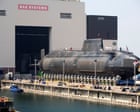
Trident Nuclear Submarine Renewal Takes Centre Stage
The upcoming phase of Trident nuclear submarine renewal represents a cornerstone of the government's approach to modern defence capability and economic revitalisation. During a significant visit to Barrow-in-Furness, senior leadership will underscore how Trident nuclear submarine renewal connects directly to broader industrial regeneration objectives across multiple regions in the United Kingdom.
This strategic initiative reflects a comprehensive commitment to maintaining Britain's independent nuclear deterrent while simultaneously stimulating economic activity in communities that depend on advanced defence manufacturing. The emphasis on Trident nuclear submarine renewal demonstrates how cutting-edge security infrastructure can serve dual purposes: strengthening national defence posture whilst creating substantial employment and industrial opportunities.
Investment Framework and Economic Impact
The £31 billion Dreadnought-class submarine programme exemplifies how substantial defence procurement generates meaningful economic benefits beyond security considerations. These vessels, constructed in the Cumbrian town renowned for maritime engineering excellence, represent one of Britain's most significant defence investments in recent decades.
Policymakers are highlighting this project as a practical demonstration of how defence sector investment functions as a catalyst for broader economic transformation. The Dreadnought-class submarines will be built using advanced manufacturing techniques, modern engineering practices, and cutting-edge technological innovations that position British industry at the forefront of naval engineering capabilities.
Community Regeneration Through Defence Procurement
Beyond the immediate military applications, Trident nuclear submarine renewal programmes create sustained employment across multiple skill levels and professional disciplines. Barrow-in-Furness, historically dependent on submarine manufacturing, stands to benefit from long-term job security and infrastructure development associated with this continued investment.
The government's messaging emphasises that defence spending represents taxpayer investment delivering tangible returns in community prosperity. Rather than viewing defence expenditure as purely budgetary obligation, this perspective frames such spending as targeted industrial policy supporting working communities throughout Britain.
Strategic Defence Considerations
The commitment to Trident nuclear submarine renewal underscores Britain's determination to maintain an independent nuclear deterrent capable of evolving threats. As global security environments shift, sustaining advanced submarine capabilities becomes increasingly important for long-term strategic stability and deterrence effectiveness.
The Dreadnought-class vessels incorporate decades of naval engineering advancement, representing the latest generation of submarine technology. These platforms will carry Trident missiles, ensuring continuity of Britain's continuous at-sea deterrent posture for decades ahead.
Regional Development Opportunities
Barrow-in-Furness has transformed significantly through its association with submarine manufacturing. The next phase of Trident nuclear submarine renewal promises to accelerate existing regeneration initiatives whilst attracting supporting supply chain industries and professional services to the region.
This concentrated defence investment creates opportunities for local businesses, educational institutions, and workforce development programmes. Training initiatives, apprenticeships, and engineering education can expand to meet growing demand from advanced manufacturing sectors.
National Industrial Strategy Alignment
The Trident nuclear submarine renewal programme aligns with broader government objectives regarding industrial renaissance and technological sovereignty. By maintaining world-class capabilities in submarine design, construction, and maintenance, Britain preserves critical expertise within domestic industries rather than outsourcing these strategic functions.
Defence sector leadership recognises that advanced manufacturing skills developed through submarine programmes have applications extending far beyond military contexts. Innovations emerging from naval engineering frequently transfer to civilian industries, enhancing competitiveness across multiple economic sectors.
The forthcoming announcement regarding Trident nuclear submarine renewal reflects sustained commitment to both security requirements and economic regeneration. As Britain navigates complex geopolitical circumstances, maintaining independent nuclear deterrent capabilities whilst supporting community prosperity represents a defining policy objective for the coming years.