US Delegates Exit UN Security Council During France's Statement
The United States withdrew from a UN Security Council session as France addressed the assembly. The walkout followed a controversial US vote against extending the human rights commissioner's mandate.
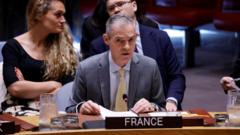
US Withdraws from Security Council Session
A dramatic UN Security Council walkout marked a significant moment in international diplomacy when United States representatives departed from the chamber during remarks delivered by the French delegation. This UN Security Council walkout highlighted growing tensions among permanent members of the world's foremost peace and security organization.
The departure of American officials sent a stark message to the international community about the depth of disagreement on key humanitarian matters. The timing of the exit, occurring precisely as France presented its position to the assembled delegates, underscored the severity of the underlying dispute between the two traditionally aligned Western nations.
The Vote That Triggered the Confrontation
The confrontation emerged from a contentious ballot on the renewal of the UN human rights commissioner position. The United States aligned itself with North Korea and Russia in voting against the proposal to extend the term of the UN high commissioner for human rights. This unusual coalition surprised observers and revealed a significant breach in the typical geopolitical alignments within the Security Council.
The decision to join these nations in opposition marked an extraordinary departure from standard American foreign policy positioning. Russia, North Korea, and the United States—three nations with vastly different geopolitical interests and international standing—found themselves voting in concert against the human rights mandate extension. This convergence of votes raised eyebrows among diplomats and international relations analysts worldwide.
France's Response and Diplomatic Fallout
France, as a permanent Security Council member, seized the opportunity to address the assembly and respond to the controversial voting position. The French delegation prepared to articulate its perspective on the human rights commissioner question and presumably to critique the American voting choice. However, the US decision to exit during these remarks transformed what might have been a standard diplomatic exchange into a dramatic gesture of disapproval.
The simultaneous voting against the human rights commissioner extension by such geographically and ideologically diverse nations raised critical questions about the United Nations' capacity to maintain consensus on fundamental humanitarian values. The human rights commissioner position carries substantial symbolic weight within the international system, representing the UN's commitment to monitoring and promoting adherence to human rights standards globally.
Implications for International Relations
The incident reflects broader fissures within the United Nations Security Council regarding human rights advocacy and international humanitarian law. The walkout demonstrates that disagreements extend beyond simple bilateral disputes to encompass fundamental questions about the UN's role in advancing global human rights norms.
This UN Security Council walkout and the underlying voting pattern signal potential shifts in how major powers view the human rights commissioner mandate. The alignment of the United States with nations typically criticized for human rights concerns suggests complex strategic calculations that transcend traditional human rights advocacy positions.
The Human Rights Commissioner Position
The office of the UN high commissioner for human rights represents one of the organization's most visible and influential human rights mechanisms. This position carries responsibility for investigating allegations of human rights violations, providing technical assistance to nations developing human rights frameworks, and advocating for vulnerable populations worldwide.
The decision to oppose extending the commissioner's mandate reflects disagreement over the office's operational scope, independence, or specific priorities. Nations voting against continuation may dispute the commissioner's past investigations, object to perceived bias in human rights determinations, or challenge the office's authority to investigate particular nations or situations.
Broader Context of UN Security Council Dynamics
The walkout incident occurred within a context of increasing polarization within the Security Council. Permanent members—the United States, Russia, China, France, and the United Kingdom—exercise veto power over substantive matters, making unity difficult on contested issues. Recent years have witnessed numerous instances of discord among these permanent members regarding humanitarian interventions, sanctions regimes, and human rights matters.
This UN Security Council walkout represents one visible manifestation of deeper structural tensions within the international security system. As nations pursue competing strategic interests, the organization's traditional role as a mediator of international disputes faces ongoing challenges. The refusal to extend the human rights commissioner's mandate signals that even ostensibly universal humanitarian values remain subject to geopolitical contestation within the highest levels of international governance.