Will Infantino Survive? UEFA Threatens World Cup Boycott
UEFA and CONCACAF reject Infantino's plan. Explore the FIFA president crisis, World Cup boycott threats, and what's next for football governance.
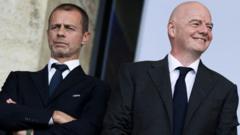
FIFA President Infantino Faces Unprecedented Challenge
The football world is experiencing unprecedented turbulence as Gianni Infantino's leadership of FIFA comes under intense scrutiny following major confederation rejections and FIFA Infantino crisis escalates dramatically. In a shocking 48-hour period, both UEFA and CONCACAF have rejected the FIFA president's controversial funding proposal, triggering questions about his political survival and the future direction of international football.
UEFA's Historic Boycott Threat
UEFA has issued an extraordinary warning that it may boycott the FIFA World Cup if concerns regarding governance and financial distribution remain unresolved. This represents one of the most serious challenges to FIFA's authority in recent memory. The European confederation's stance reflects deep frustration with Infantino's administration and its handling of revenue allocation among regional confederations.
The threat carries substantial weight given UEFA's influence over qualifying teams and broadcasting rights. A European boycott would fundamentally undermine the tournament's credibility and financial viability. UEFA officials have made clear that without meaningful dialogue and structural reforms, maintaining their participation cannot be guaranteed.
CONCACAF Rejects Proposed Funding Framework
The Confederation of North, Central American and Caribbean Association Football (CONCACAF) has formally rejected Infantino's funding plan, citing inadequate compensation and unfavorable terms. This rejection demonstrates that regional confederations increasingly view the FIFA president's proposals as self-serving rather than equitable.
CONCACAF's decision represents a significant blow to Infantino's authority, particularly as it follows UEFA's similar position. The combined pressure from two major confederations suggests growing consensus that fundamental changes to FIFA's governance structure are necessary.
The Broader Governance Crisis
These developments underscore systemic tensions within international football's administrative framework. The FIFA Infantino crisis reflects broader questions about how football's global body distributes resources, makes decisions, and represents diverse regional interests. Infantino's tenure has been marked by expansion initiatives and modernization efforts, but these have increasingly been perceived as prioritizing central FIFA interests over confederation autonomy.
The current confrontation suggests that regional confederations are no longer willing to accept decisions made unilaterally from FIFA headquarters. This shift represents a potential turning point in how international football governance operates.
World Cup Implications
A UEFA World Cup boycott would have catastrophic consequences for FIFA's flagship tournament. European nations represent significant television markets, sponsorship value, and competitive quality. Without major European teams, the World Cup's global appeal would diminish substantially, potentially affecting FIFA's revenue streams and the tournament's sporting legitimacy.
The threat also raises questions about how FIFA would respond to such an unprecedented scenario. Establishing replacement participants would prove administratively complex and commercially problematic. Tournament organizers in the host nation would face operational nightmares with potential fixture rescheduling and venue modifications.
Infantino's Political Position
As FIFA president, Infantino maintains formal authority to implement decisions, but his political capital appears severely diminished. The simultaneous rejections from UEFA and CONCACAF suggest he lacks sufficient support among major confederations to enforce his agenda. This creates a precarious situation where his presidency becomes increasingly vulnerable to challenge or removal.
The Gianni Infantino future now depends on his ability to demonstrate flexibility, engage in genuine dialogue with regional confederations, and propose solutions that address their legitimate concerns. Without significant concessions or restructuring, his continued leadership faces serious jeopardy.
What Happens Next?
Immediate negotiations between FIFA and the rebelling confederations appear essential to prevent escalation. The organizations must establish productive dialogue channels to address specific grievances regarding financial distribution, governance transparency, and decision-making processes.
Potential pathways forward could include revised funding proposals, expanded confederation representation on FIFA committees, or structural reforms granting regional bodies greater autonomy. However, substantial compromise will be necessary from FIFA's executive level.
Conclusion: A Turning Point for Football
The current crisis represents a potential watershed moment for international football governance. Whether Infantino can navigate these challenges or whether the FIFA Infantino crisis leads to his replacement remains uncertain. What is clear is that the era of unilateral FIFA decision-making appears to be ending, replaced by a new paradigm requiring genuine confederation partnership and equitable resource distribution.
The football world watches closely as these developments unfold, recognizing that the outcome will shape international football administration for years to come.


